

BY STYLE
The Essential Fino & Manzanilla Guide: Eight Wines to Buy Now
Eight biologically aged wines from the Marco de Jerez — selected across producers, price points and styles, with notes on what distinguishes each bottle and why it merits attention.
BUYING GUIDE
What you are choosing between
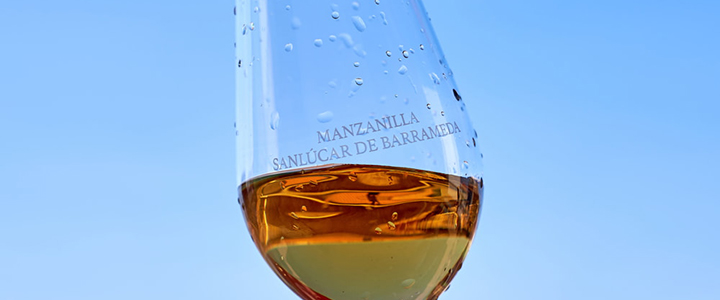
Fino and Manzanilla are closely related, but they are not interchangeable. Fino belongs to the DO Jerez-Xérès-Sherry and is the dry, biologically aged style historically associated above all with Jerez de la Frontera and El Puerto de Santa María. Under the current regulatory map, Fino may be aged in the municipalities of the delimited Jerez zone with the exception of Sanlúcar de Barrameda. Manzanilla has its own DO — Manzanilla-Sanlúcar de Barrameda — and its biological ageing must take place for at least two years in bodegas located in the municipality of Sanlúcar de Barrameda. The distinction is not cosmetic: Sanlúcar sits at the mouth of the Guadalquivir estuary, where higher humidity and moderated temperatures favour a particularly persistent veil of flor. The result is usually lighter, sharper, more saline and more delicate than most Finos aged inland, although bodega, cask selection and solera management can matter as much as geography.
Fino Viejo and Manzanilla Pasada are no longer loose descriptive terms. Current rules attach them to biologically aged wines with at least seven years of average ageing and the slight oxidative signs that come from a longer life under flor. Manzanilla Pasada therefore occupies a third position for the buyer: it remains Manzanilla, but extended biological ageing gradually weakens or thins the flor, allowing subtle oxidative development. The wine retains its saline core while gaining old-yeast weight, dried-fruit nuance, iodine and greater depth. It remains one of the most undervalued categories in the region.
What all these wines share is dryness, biological ageing and a need for freshness in service. For dry generosos, the current analytical threshold is ≤4 g/l sugar, expressed as glucose and fructose. They should be served cold and consumed promptly once opened. A bottle left open for three weeks is no longer the same wine.
The Selection
Fino Inocente — Valdespino
One of the benchmark single-vineyard Finos, drawn from Valdespino’s Macharnudo Alto holdings in the Pago de Macharnudo, in Jerez. It is also one of the rare modern Finos whose base wine is still fermented in American oak butts with native yeasts before entering a solera system of unusual complexity, with ten criaderas. The finished wine is normally around ten years old, giving it far more depth than most standard Finos and placing it close to the current Fino Viejo register, although Valdespino continues to bottle it simply as Fino Inocente. Expect toasted almond, sourdough, fresh yeast, beeswax, chalk and a long, saline finish.
Tío Pepe Fino En Rama — González Byass
En rama is a regulated labelling mention rather than a separate wine style. It is reserved for wines that have not undergone clarification or cold stabilisation, and it usually signals much gentler handling than the standard filtered release. Tío Pepe En Rama gives the familiar Tío Pepe solera a more immediate voice: greater texture, more aromatic intensity and a more pronounced flor character. The 2026 spring bottling is the seventeenth edition, selected by Antonio Flores and Silvia Flores from casks showing flor at its seasonal peak. This is a wine to buy by saca and by bottling date. The producer itself recommends drinking it within three months of bottling; in practical terms, freshness matters more than cellaring ambition.
Manzanilla La Gitana — Hidalgo-La Gitana
The classic entry point into Sanlúcar from one of the region’s oldest family producers, founded in 1792. La Gitana is aged in the San Luis bodega, close to the Guadalquivir and shaped by Sanlúcar’s maritime humidity. Its family solera dates back to the early nineteenth century and is organised through eight criaderas, giving a mass-market benchmark a more serious cellar foundation than its price might suggest. Pale, dry and nervy, it shows the textbook vocabulary of Manzanilla: chamomile, sea spray, green almond, fresh yeast and a clean, saline finish. It remains one of the most reliable introductions to the style.
Manzanilla Solear Pasada En Rama — Barbadillo
Barbadillo has bottled Solear Pasada En Rama seasonally since 1999, making it a reference point for the modern en rama movement. The wine comes from an older selection within the Solear family and is drawn four times a year — spring, summer, autumn and winter — so each saca captures a different seasonal expression of flor. Current releases are normally offered in 37.5 cl bottles under the Solear Saca Estacional range, while special 75 cl formats have appeared for anniversary bottlings. It has the breadth, old-yeast depth and bitter-saline persistence expected from Manzanilla Pasada, but the seasonal bottling also preserves a vivid sense of Sanlúcar freshness.
Fino Jarana — Lustau
Part of Lustau’s Solera Familiar range, Fino Jarana is aged under flor in Bodega Las Cruces in Jerez de la Frontera. Lustau presents it as a Jerez-style Fino: fresh, mineral and pungent, with almond and bakery notes, dry and crisp on the palate yet rounded enough to show the fuller profile often associated with inland ageing. With an average age of around four years, it is not intended as a rare cellar selection, but as a consistent, well-managed reference for classic Jerez Fino at an accessible price point.
Manzanilla Pasada Pastrana — Hidalgo-La Gitana
A single-vineyard Manzanilla Pasada from Finca Pastrana in the Pago de Miraflores, one of the Sanlúcar pagos most closely associated with Palomino of marked saline definition. The wine was conceived in the 1980s around a stricter vineyard selection and was first commercialised in 1997. It is aged far longer than La Gitana — usually cited at around twelve years — so the flor imprint remains clear while the final phase brings semi-oxidative depth. Bottled en rama, with no clarification or cold stabilisation and only the lightest possible handling, Pastrana sits between the freshness of Manzanilla and the structured complexity of Amontillado: salted almond, dried chamomile, olive brine, iodine, quince, old yeast and a long, smoky-saline finish.
Fino El Maestro Sierra — El Maestro Sierra
El Maestro Sierra began as a nineteenth-century almacenista house and is now one of Jerez’s most distinctive independent bottling bodegas. Founded in 1830 by master cooper José Antonio Sierra, it works on a small, traditional scale from a privileged position in Jerez, exposed to Poniente winds that help sustain flor. The house is known for old soleras, manual cellar work, minimal handling and in-house cooperage. Its Fino is best described cautiously as a four-to-six-year biological wine, because public age references differ by source and release. It is bottled with minimal filtration rather than marketed as a conventional polished Fino. The profile is deeper and more assertive than most young Finos: fresh bread dough, chamomile, almond, iodine, subtle wood and a dry, persistent, faintly bitter finish.
Fino Quinta — Osborne
Produced from Osborne’s historic soleras in El Puerto de Santa María, a house whose Bodega de Mora dates to 1772. Osborne is now better known internationally for Brandy de Jerez and a broader drinks and food portfolio, but Fino Quinta remains an important classical Sherry reference. The wine spends about four to four-and-a-half years in the solera. Its name traces to the fifth criadera of the older Fino La Honda solera, separated to create a younger and lighter style when consumer preferences shifted. Pale yellow with greenish highlights, it is gently saline and lightly nutty, with flor, almond, chamomile and a clean bitter finish. A useful, affordable example of the El Puerto style, though availability can be uneven outside Spain.
A note on serving and storage
Fino and Manzanilla are not wines to keep indefinitely unless the buyer is deliberately experimenting with bottle age. For normal use, store them in a cool, dark place at a stable temperature and open them within six to twelve months of purchase, sooner for en rama bottlings. Serve lighter Finos and Manzanillas at around 7–9°C; older Manzanilla Pasada or more concentrated en rama bottlings can be allowed to rise slightly in the glass. Once opened, recork and refrigerate. A standard filtered Fino or Manzanilla is best finished within a week; en rama and pasada bottlings are at their most vivid within the first two to four days. These are not wines that improve with neglect.
Where to buy
Treat this guide as a producer and style guide, not as a live stock list. The wines above may appear through specialist retailers in the UK and US, but availability changes by saca, shipment and market. In the United Kingdom, retailers worth checking include The Whisky Exchange, Butlers Wine Cellar, Soho Wine Supply, The Wine Society, Tanners Wines, Amathus Drinks and Waitrose Cellar. In the United States, useful sources include 67 Wine, K&L Wine Merchants, Astor Wines & Spirits, Despaña Vinos y Más, Flatiron Wines & Spirits and MacArthur Beverages, with regional specialists such as Slope Cellars and Noe Valley Wine & Spirits also worth checking. Shipping rules, release dates and bottle formats vary, especially in the US and for en rama or limited bottlings. For the most reliable distribution information in your market, contact the producer, importer or specialist retailer directly.
Editorial note
This guide was reviewed against current publicly available producer information, regulatory documentation and specialist retailer data. Prices, release dates and availability may change by market and by saca, especially for en rama and limited bottlings. Readers should check the bottling date, format and release before purchase. Last editorial review: June 2026.