
BY STYLE
The Pedro Ximénez Guide: Eight Wines Across the Full Spectrum
Pedro Ximénez is one of the most concentrated sweet styles in the Marco de Jerez. Eight wines - from fresh solera bottlings to old VOS and VORS releases - show what the category can offer at each level of age, sweetness and oxidative concentration.
BUYING GUIDE
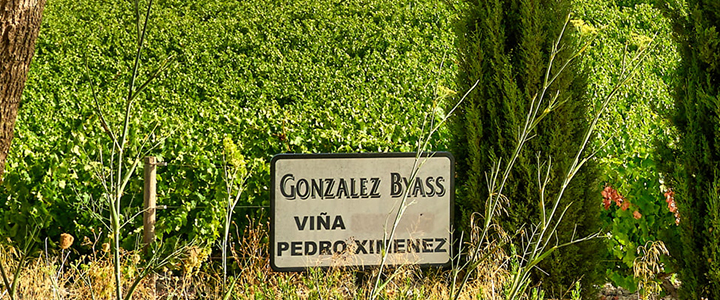
Pedro Ximénez is one of the most distinctive wine categories in the Marco de Jerez. It belongs to the family of vinos dulces naturales: wines obtained by fortifying musts from overripe or raisined grapes and then ageing them oxidatively for at least two years. Under the DO Jerez-Xérès-Sherry, Pedro Ximénez must be made from at least 85% must of raisined Pedro Ximénez grapes, with a minimum sugar level of 212 g/l expressed as glucose and fructose.
The defining practice is soleo – or asoleo – the sun-drying of the grapes after harvest, commonly on esparto mats. It is not exclusive to Pedro Ximénez, since Moscatel may also be made from raisined grapes, but in Pedro Ximénez it reaches its most concentrated and recognisable expression. Depending on weather and producer practice, the grapes may remain in the sun for up to around two weeks, losing water and concentrating sugars, acidity and flavour before pressing.
The resulting must is dense and difficult to ferment. Fermentation may begin slowly, but the must or partially fermenting must is fortified with wine alcohol to prevent or stop fermentation, leaving a very sweet wine that then enters botas for oxidative ageing, normally through the criaderas and solera system. Producer-level statements about vineyard origin should be read carefully: some important wines use estate fruit from Jerez Superior, while the current regulations also allow, under specific conditions, the use of fortified must from raisined Pedro Ximénez grapes from Montilla-Moriles.
What the solera does to Pedro Ximénez over time is not simply a matter of adding complexity. It is a physical transformation. The wine darkens from mahogany to ebony. Evaporation concentrates what remains. Volatile acidity builds slowly, adding a thread of lift that cuts through the sweetness. The raisin and fig notes of a younger Pedro Ximénez can deepen into dark chocolate, coffee, molasses, tar, balsamic reduction, old wood and dried citrus peel. At VOS and VORS level, the wines can move beyond familiar dessert-wine vocabulary.
This guide covers the full spectrum: from wines around five to twelve years of age, where raisined fruit remains dominant, through mature and certified old solera wines, to VORS bottlings where decades of oxidative ageing have transformed the raw material into something singular.
Young to mature solera wines – fruit still dominant
Pedro Ximénez La Cilla – Barbadillo
La Cilla is Barbadillo’s house Pedro Ximénez, aged oxidatively for five years in the traditional Jerez system of criaderas and solera. The current technical sheet gives 17.5% alcohol and around 400 g/l sugar, with ageing in American oak in the Las Pastoras cellars. The profile is very dark mahogany, with plums, raisins and chocolate against a background of seasoned wood. At this level, the wine’s character is still primarily defined by the grape and the soleo process rather than by very old oxidative concentration: the sweetness is direct, the fruit is clear, and the finish is warm and persistent. A reliable entry point to the category.
Néctar Pedro Ximénez – González Byass
Néctar is González Byass’s accessible Pedro Ximénez and a widely available benchmark in export markets. The current producer page presents it as 100% Pedro Ximénez, aged for nine years in the criaderas and solera system. The wine is ebony in colour, with aromas of raisins, figs, dates, honey, syrup and fruit preserve. At around 370 g/l residual sugar in current technical material, it is intensely sweet, but the palate retains enough acidity to keep the texture from becoming static. It is a useful reference point for the style before the most oxidative notes take over.
Pedro Ximénez El Candado – Valdespino
El Candado takes its name – the padlock – from the family story printed on the label: selected casks were supposedly kept locked away to preserve the wine for one person. Specialist sources trace the solera to the almacenista Manuel de Argüeso, acquired by Valdespino in 1972, while current trade material places the wine at around ten years of oxidative ageing. It remains a concentrated but relatively expressive Pedro Ximénez: 100% Pedro Ximénez, 17% alcohol and around 400 g/l residual sugar in a current UK technical sheet. Raisins, figs, sultanas, roasted coffee and sweet liquorice appear without losing the brighter fruit-and-spice line that makes it more immediately open than heavier old examples.
Pedro Ximénez San Emilio – Lustau
San Emilio is the most mature wine in this first group and a step up in weight and complexity. Lustau states that the grapes are laid out in the sun until they are practically raisins, after which fermentation begins slowly and is halted to retain the natural sugars. The wine then ages oxidatively for twelve years in Jerez de la Frontera. Ebony in colour, with iodine highlights, it combines figs, raisins and dates with a dense, velvety palate and a very long finish. The technical sheet gives 17% alcohol and 417 g/l residual sugar. It is also a strongly validated bottle in competition terms, having received Platinum and 97 points at the 2021 Decanter World Wine Awards.
Mature and old solera wines – age and wood gain weight
Pedro Ximénez – El Maestro Sierra
El Maestro Sierra’s standard Pedro Ximénez requires careful wording because public technical information is not fully uniform. Published trade sources describe anything from five-plus years to fifteen years in solera; for publication, it is safest to present it as a mature, non-age-certified Pedro Ximénez rather than attaching a regulatory age claim to the label. What is consistent across the available material is the style: 100% Pedro Ximénez, 15% alcohol, oxidative solera ageing and the house’s traditional, low-intervention cellar culture. The wine is dark and concentrated, but it often shows a fresher spice-and-caramel register, with orange peel, honey, raisins and coffee-like notes carried by more acidity than many Pedro Ximénez wines at comparable sweetness.
Don Guido Pedro Ximénez VOS – Williams & Humbert
Don Guido carries VOS certification, with a minimum average age of twenty years. The current Williams & Humbert product sheet describes a natural sweet Pedro Ximénez from raisined grapes grown in Pago de Balbaína, in Jerez Superior. The grapes are partially sun-dried for fifteen days, pressed, fortified first to 9% and later to 18%, then aged oxidatively in criaderas and solera for at least two decades. Current producer data gives 18% alcohol and approximately 440 g/l sugar, with a stated tolerance. The profile has shifted decisively away from fresh fruit into very old sweet-wine territory: black mahogany colour, raisins, figs, broad balsamic notes, low acidity, honeyed texture and a long, persistent finish. Named for Guy (Guido) Williams, son of the house’s founder, it is the old Pedro Ximénez reference within the Williams & Humbert range.
VORS – thirty years and beyond
Noé Pedro Ximénez VORS – González Byass
Noé is González Byass’s VORS Pedro Ximénez. Current technical material states that the grapes are laid out on esparto mats for up to two weeks, that the must begins to ferment slowly and stops at around 7% alcohol because of sugar stress, and that the wine is then fortified to 15% before entering the Noé solera. It remains in cask for an average of more than thirty years and is certified VORS. González Byass also states that, for this sweet Pedro Ximénez Sherry, it uses only grapes from its own vineyards in Jerez Superior. The result is not simply an older version of Néctar: the wine becomes more volatile, more balsamic and more savoury, with mature fig, coffee, spice, mint-like lift and a dense, silky palate. The current technical sheet gives more than 400 g/l residual sugar, so the sweetness remains massive; what age supplies is not less intensity, but more lift and complexity.
Pedro Ximénez Niños VORS – Valdespino
Niños is one of the most remarkable certified Pedro Ximénez wines in the Marco. VORS guarantees an average age of more than thirty years, but published specialist and technical materials generally present this tiny Valdespino solera as much older, in the 50-60+ year range, with some material citing only eight casks. A selection from the Pedro Ximénez El Candado solera is used to refresh the youngest criadera of this wine. Published technical data has cited 15% alcohol, 5.7 g/l total acidity and around 440 g/l residual sugar, although very old Pedro Ximénez figures should always be treated as release-specific. The profile is very dark mahogany, almost opaque and extremely dense: concentrated ripe fruit, raisins, dates, dried figs, molasses, roasted coffee and liquorice, with acidity as the essential counterweight. Production is necessarily tiny and availability is usually limited to specialist importers and serious fortified-wine retailers.
A note on age and technical data
Ages in this guide are average solera ages, not vintage dates. VOS and VORS are official age categories, but additional claims such as fifty or sixty years should be treated as producer or specialist-source information unless the exact bottling carries that certification or documentation. Sugar, acidity and alcohol figures are useful guides to style, but they are not immutable across every release or market.
A note on serving and storage
Pedro Ximénez is best served slightly chilled – around 10-12°C – in small quantities. A standard white-wine glass or small dessert-wine glass is preferable to a very narrow copita; the aromatics need space. The classic pairings are strong blue cheeses, dark chocolate and vanilla ice cream, but mature Pedro Ximénez is also worth drinking alone without competition. Open bottles are far more stable than Fino or Manzanilla, but they still lose aromatic precision: recork, refrigerate and avoid keeping them open indefinitely. At VOS and VORS level, the wine deserves the same attention as any great aged dessert wine.
Where to buy
Treat this guide as a producer and style guide, not as a live stock list. The wines above may appear through specialist retailers in the UK and US, but availability changes by saca, shipment and market. In the United Kingdom, retailers worth checking include The Whisky Exchange, Butlers Wine Cellar, Soho Wine Supply, The Wine Society, Tanners Wines, Amathus Drinks and Waitrose Cellar. In the United States, useful sources include 67 Wine, K&L Wine Merchants, Astor Wines & Spirits, Despaña Vinos y Más, Flatiron Wines & Spirits and MacArthur Beverages, with regional specialists such as Slope Cellars and Noe Valley Wine & Spirits also worth checking. Shipping rules, release dates and bottle formats vary, especially in the US and for en rama or limited bottlings. For the most reliable distribution information in your market, contact the producer, importer or specialist retailer directly.
Editorial note
This guide was reviewed against current publicly available producer information, regulatory documentation and specialist retailer data. Prices, release dates, bottling formats and availability may change by market and by saca. Ages are average solera ages unless expressly described otherwise; analytical figures such as alcohol, acidity and residual sugar correspond to the cited producer or importer material and may vary slightly by release, format or market. Readers should check the exact bottling, format and release before purchase.